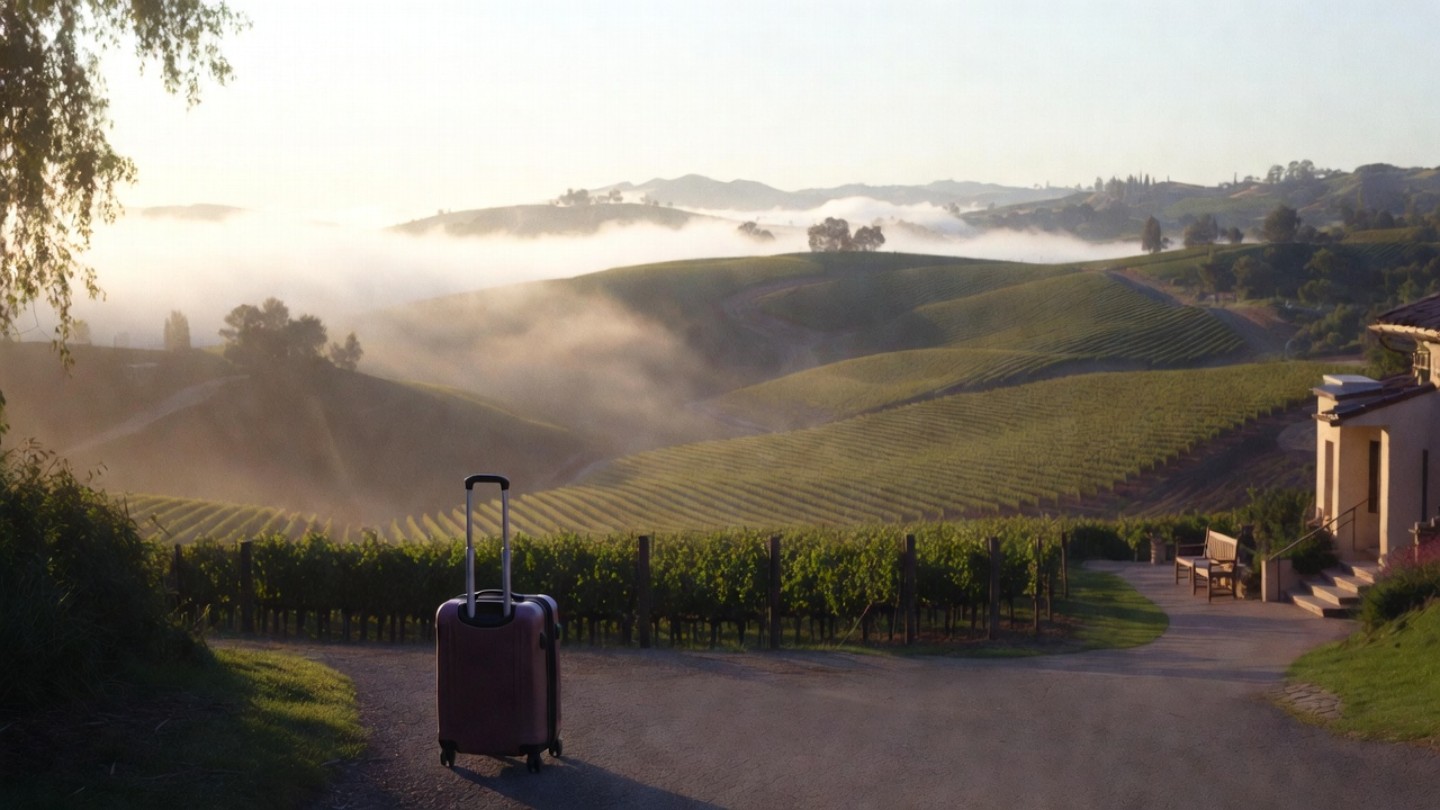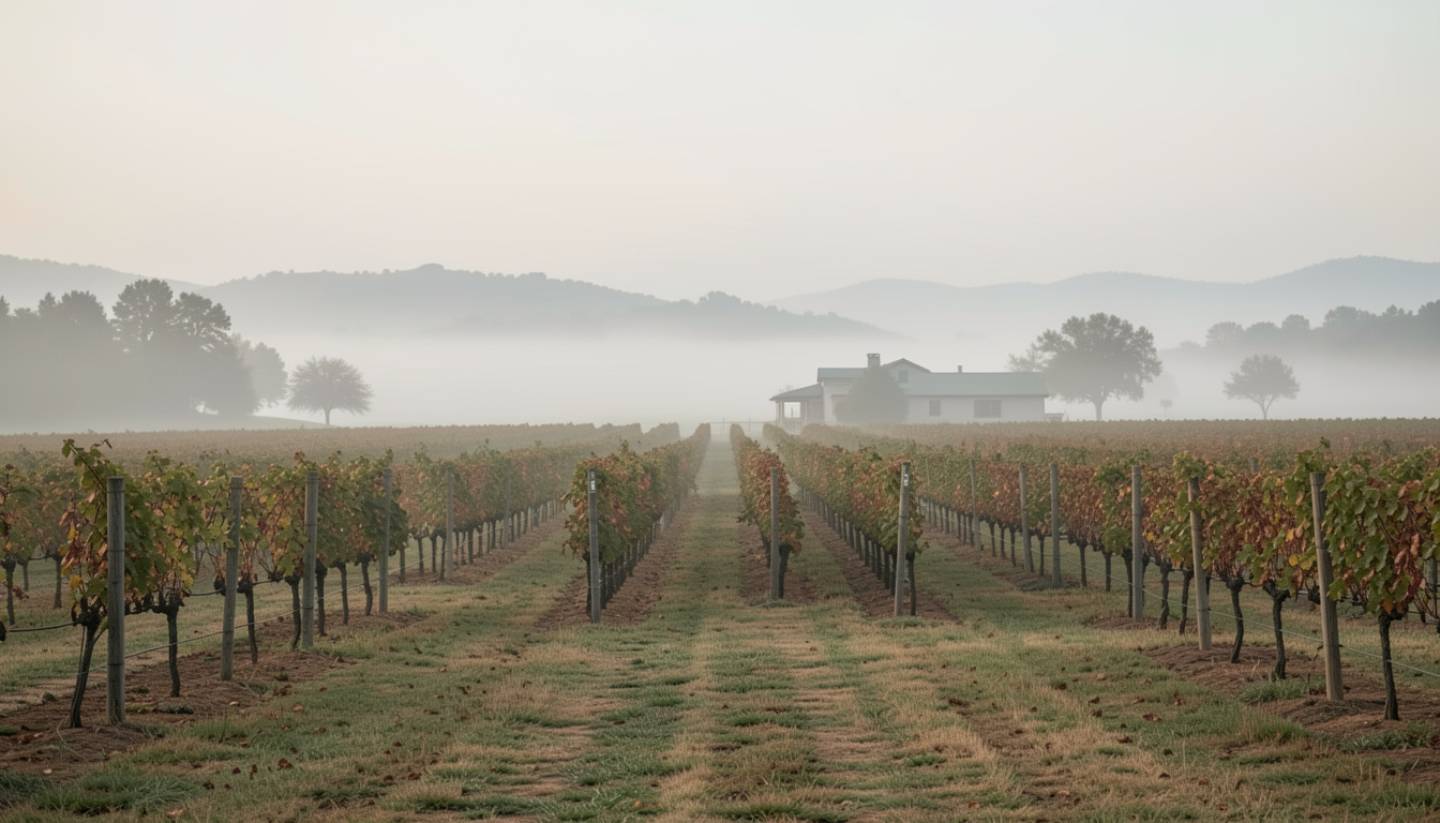
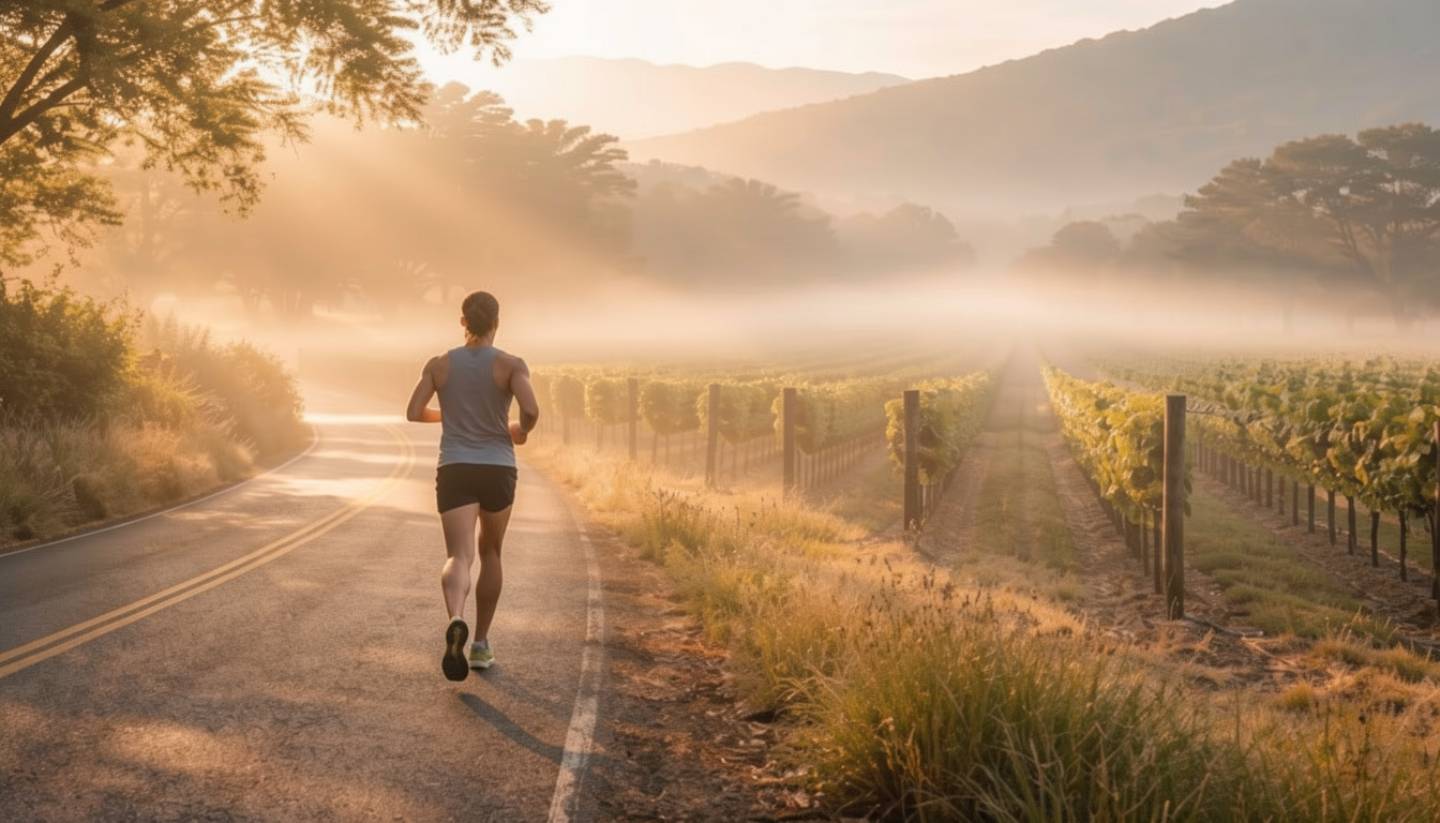
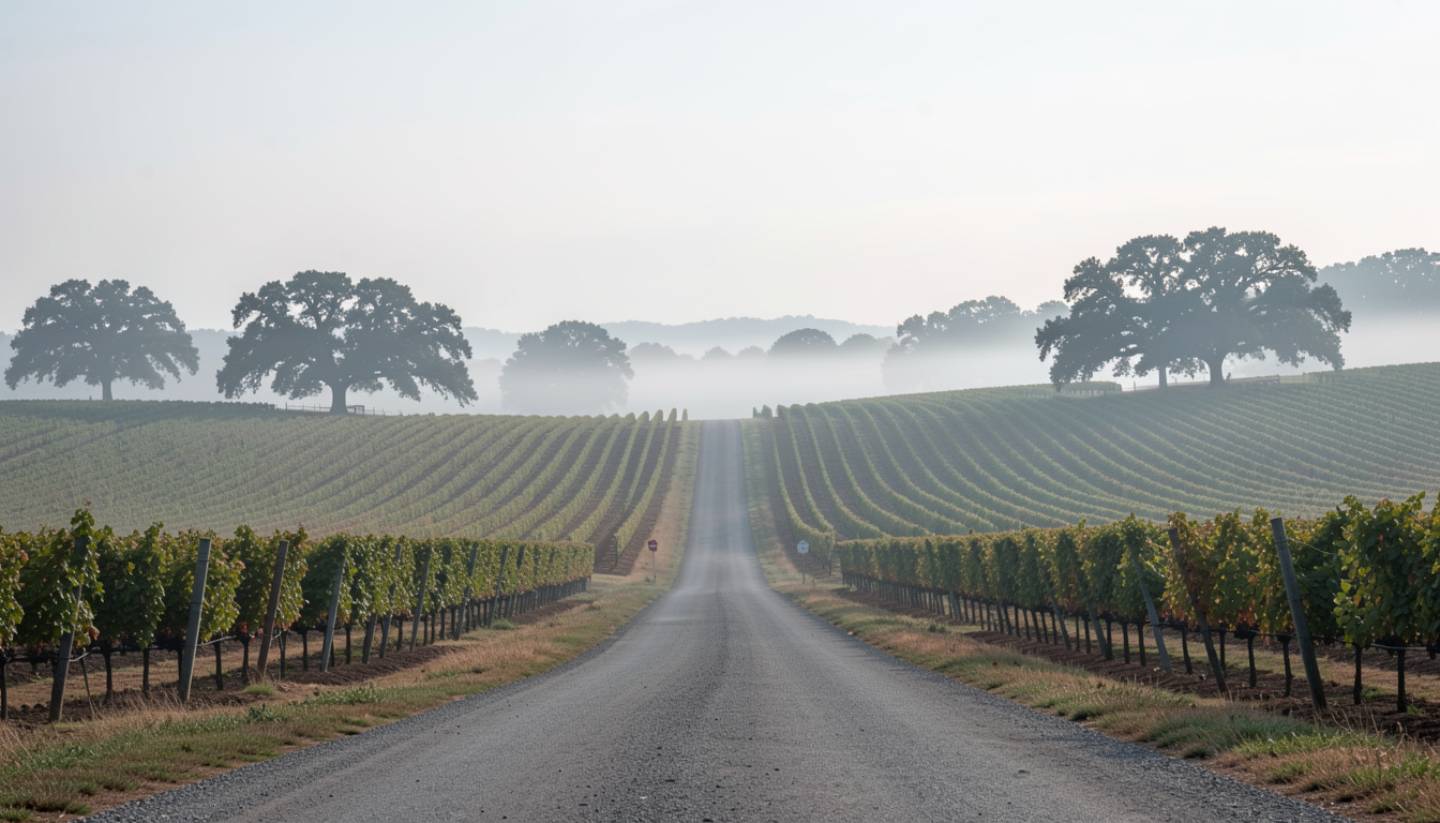
Before the first tasting room unlocks its doors, Napa Valley belongs to runners. Fog settles low across the Rutherford benchlands, gravel answers each footfall, and vineyard rows extend forward in calm, repeating lines. This is not a place for chasing splits or stacking miles for the sake of data. It is a place for rhythm, breath, and movement that feels integrated rather than extracted. If the way you understand a place is by moving through it while the day is still forming, Napa meets you without resistance.
What This Experience Is Really About
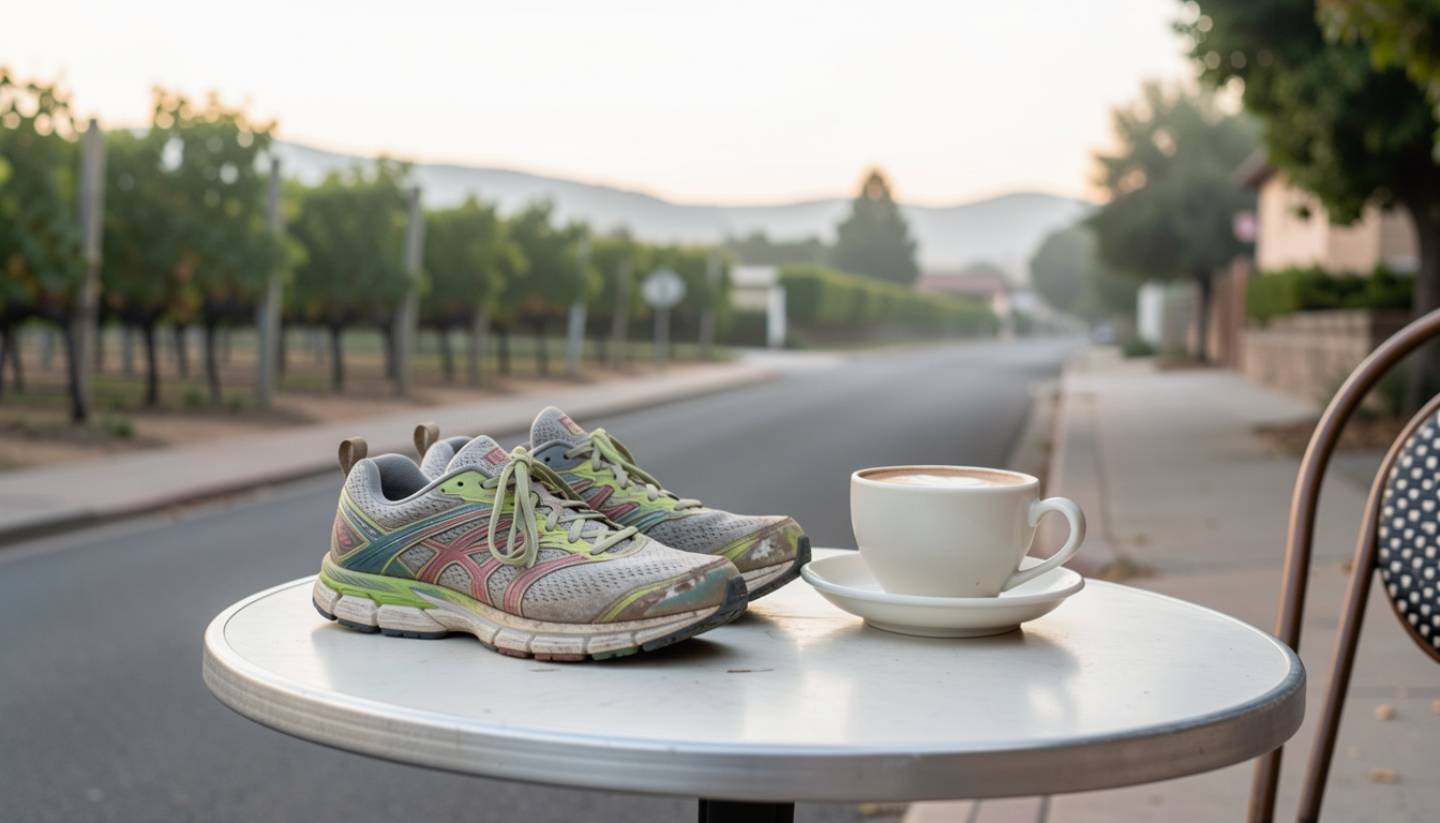
Running in Napa is about alignment, not intensity. The land sets the cadence. Long, straight rows of Cabernet encourage even breathing, while subtle bends near the foothills keep you attentive. You notice Rutherford Dust collecting on your shoes, irrigation lines being checked, and the way the valley gently tightens as you move north toward the base of Mt. St. Helena. These runs are not about distance. They are about arriving at the day already grounded.
When It’s Best
Early mornings (6:00–9:00 AM)
Cool air, minimal traffic, and uninterrupted quiet.
Midweek (Tuesday–Thursday)
The valley moves at a resident’s pace, not a visitor’s schedule.
Spring and fall
Balanced temperatures and soft, even light across the vines.
Winter
Crisp air, near silence, and clear sightlines through dormant vineyards.
What Most Visitors Miss
Most visitors sleep through Napa’s most honest hours. By the time brunch tables fill in Yountville, runners have already watched the fog lift, seen vineyard crews begin their work, and felt how compact and legible the valley really is. Napa reveals itself differently when you experience it under your own power, before the day starts performing.
My Local Notes
Some of my clearest Napa mornings have begun with a simple out-and-back along the Silverado Trail corridor. No headphones. Just breath, footfall, and birds breaking the fog. Those miles taught me more about the valley’s proportions and patience than any drive ever could. By the time I’m back in St. Helena with coffee in hand, the day already feels settled.
The Best Scenic Running Routes in Napa Valley
Silverado Trail Side Roads (Rutherford to St. Helena)
Flat, straight, and quietly agricultural. Use parallel farm roads like Conn Creek Road or Skellenger Lane instead of the main Trail. As the fog pulls back toward the Mayacamas range, the valley opens in full.
Yountville to Oakville Connector Roads
Shorter loops using Yountville Cross Road. You pass historic vineyard gates and shaded stretches that feel uncurated and real. A classic four- to six-mile circuit that captures the valley’s center of gravity.
Calistoga North-End Loops
Cooler mornings and a tighter sense of enclosure near the base of Mt. St. Helena. Ideal if you like a visual anchor on the horizon while you run.
Napa Valley Vine Trail (Select Sections)
A protected, paved option best suited for relaxed jogs. Start early, especially between Napa and Yountville, before cyclists and walkers arrive mid-morning.
How to Plan a Runner-Friendly Napa Stay
Choose walk-out access
Boutique inns in St. Helena or Yountville let you start moving immediately.
Run first, always
Before 8:00 AM keeps you ahead of heat, traffic, and equipment.
Hydrate early
Morning fog masks how quickly the valley warms once the sun clears the Vaca range.
Honor the post-run ritual
In Napa, a long brunch is the natural extension of a good run.
A Gentle Personal Note
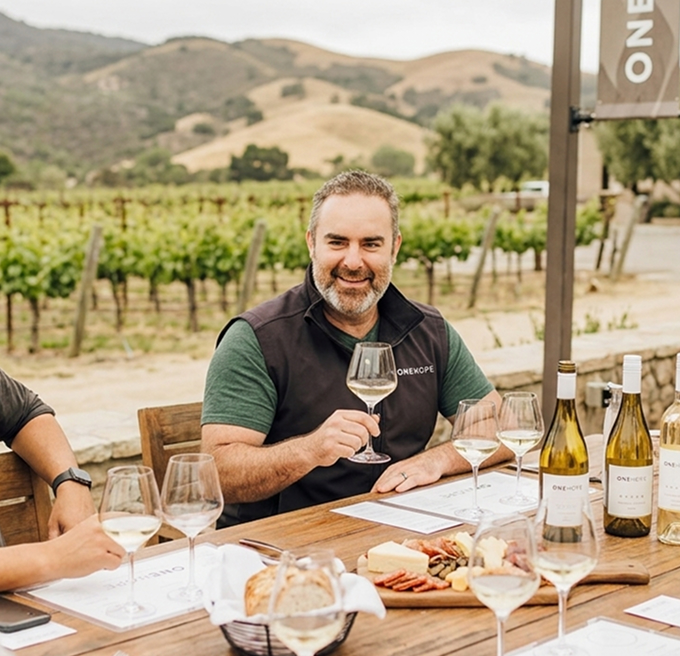
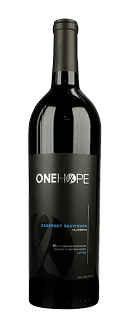
I’ll admit a little bias here. Estate 8 and ONEHOPE sit in a part of the valley that feels designed for mornings like this. Wide sightlines, calm roads, and respect for early starts were intentional choices. It’s my passion project because I believe how you begin the day shapes everything that follows. When guests arrive after a run, already centered, the valley tends to meet them there.
Small Histories
Before Napa was a destination, it was a place of daily movement. Fields were walked, rows were checked, and distances were measured by time and effort rather than convenience. Running here is not a trend. It is a modern continuation of how the land has always been known: slowly, repeatedly, and with attention.