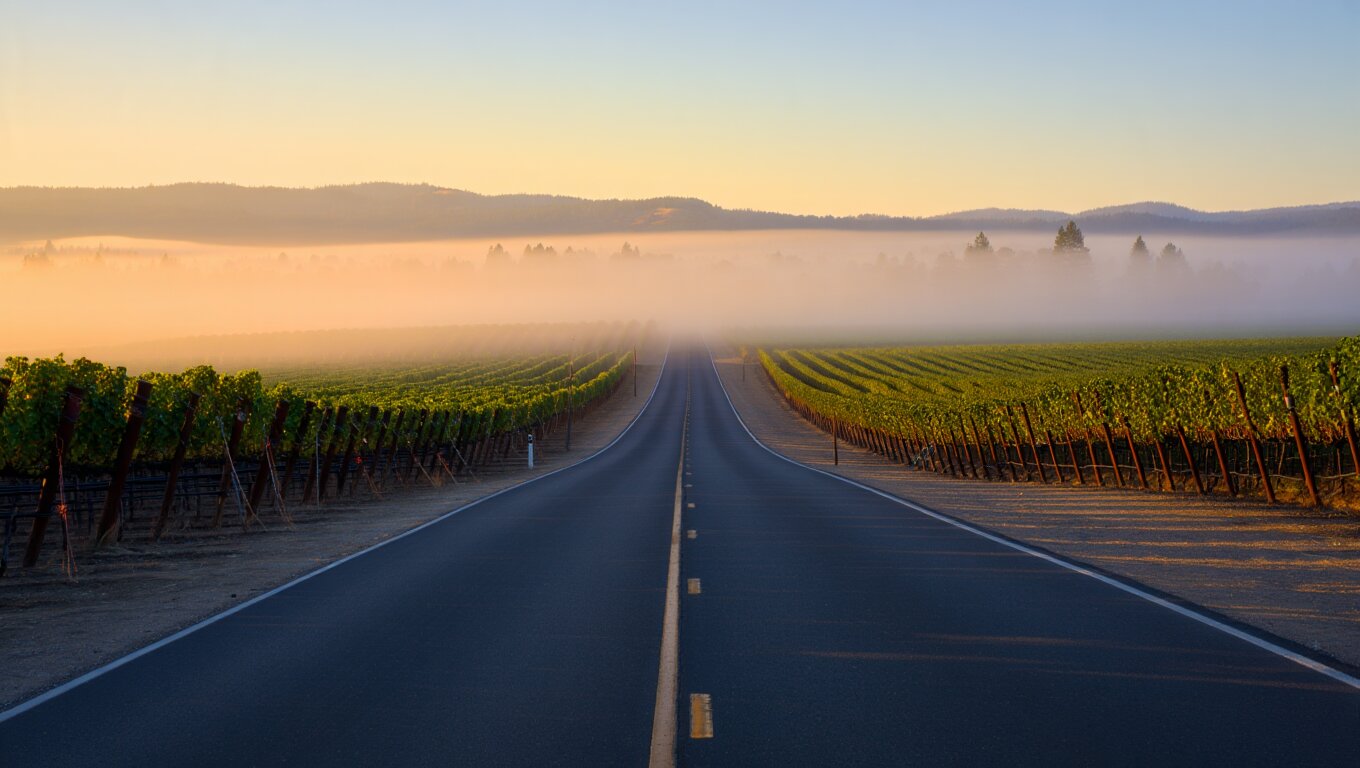
Napa Valley looks simple on a map. One long stretch of road, a handful of small towns, vineyards folded between two mountain ranges. But anyone who has spent real time here knows that how you move through the Valley quietly shapes the entire experience.
Locals plan days around light, traffic patterns, heat, and harvest rhythms. We know that a relaxed Napa day rarely pairs well with rushing, backtracking, or staring at GPS instead of the view. Transportation here is not just about getting from one stop to the next. It sets the tone for how present you feel at the table and how much space the day has to breathe.
The good news is that Napa offers several ways to get around, each suited to a different kind of traveler and a different kind of day.
How Transportation Really Works in Napa
Napa Valley runs roughly 30 miles north to south, from Downtown Napa to Calistoga. There are only two true north south arteries: Highway 29, which functions like the Valley’s main street, and the Silverado Trail, which locals treat as the calmer bypass.
East to west crossings are limited to a handful of connector roads like Oakville Cross Road and Zinfandel Lane. Miss one turn or choose the wrong sequence and you can easily add 30 minutes to a drive that looks short on paper.
Local rhythm matters. Mornings are quiet and efficient. Midday slows noticeably. Late afternoons bottleneck, especially near St. Helena when winery staff and locals head home. Understanding this flow is the difference between a smooth day and a frustrating one.
Private Drivers and Wine Tours
For tasting days, this is the gold standard.
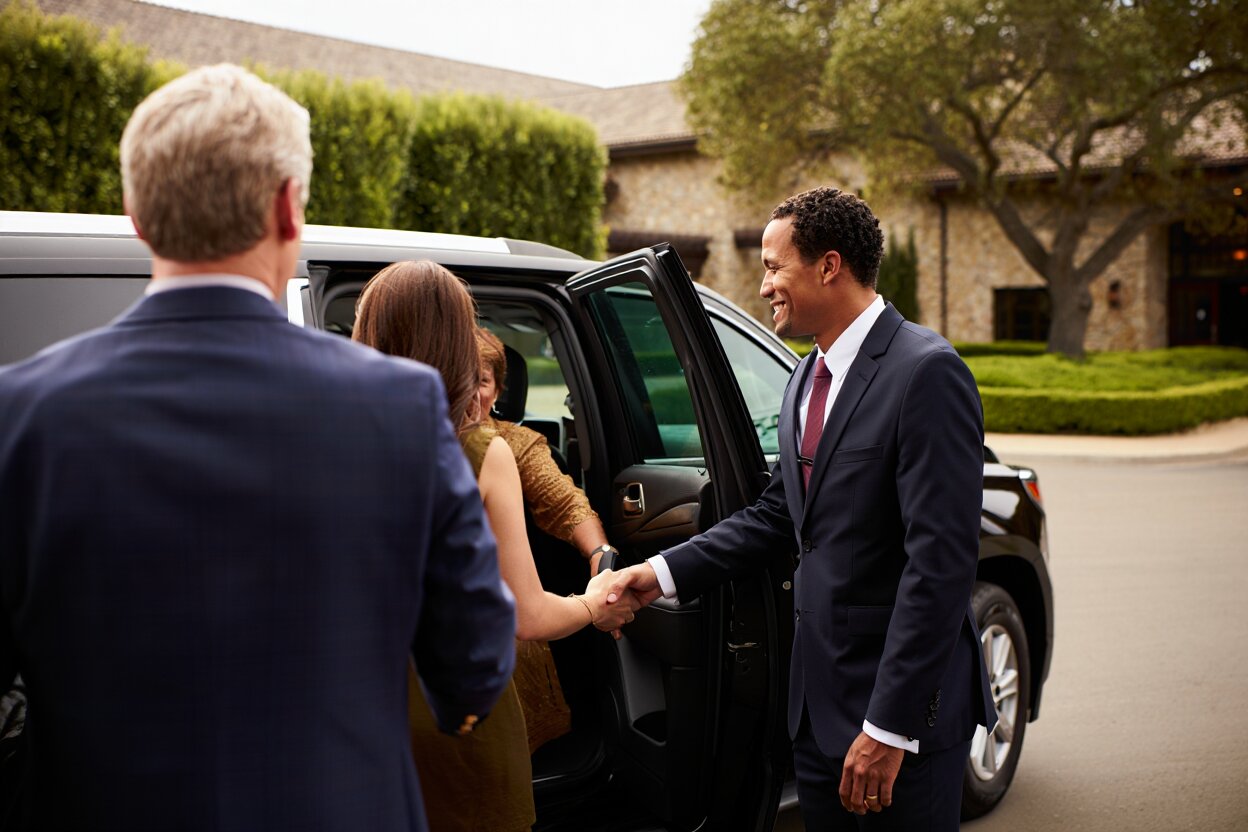
A good Napa driver does far more than drive. They understand tasting cadence, driveway logistics, and which stretches of road quietly unravel schedules at certain times of day. They know when to swap the order of appointments, when to slow the pace, and when to leave you alone with a view.
Best for: Couples, small groups, celebrations, and anyone visiting multiple wineries in a single day.
Local cue: Most experienced drivers favor Silverado Trail in the morning and avoid Highway 29 between late morning and mid afternoon whenever possible.
This option removes decision fatigue. You stay present. Someone else handles the road.
Ride Share (Uber and Lyft)
Ride share works well, with limits.
Where it works: Downtown Napa, the Oxbow District, riverfront hotels, and short trips to Yountville.
Where it struggles: St. Helena, Calistoga, Howell Mountain, and evenings after 9:00 PM.
Upvalley wait times regularly exceed 30 minutes, and cell service drops quickly once you leave town centers. Ride share is a helpful supplement, but not a reliable backbone for winery days.
Rental Cars
A rental car offers flexibility, especially outside of tasting hours.
Best for: Families, grocery runs, sunrise hikes, state parks, and photography outings.
Local parking note: Downtown Napa has several easy, free parking garages. St. Helena parking is tightly enforced with time limits and regular patrols.
Many visitors use a hybrid approach. Rent a car for the trip, then hire a driver on wine days. It is one of the most practical ways to experience the Valley without stress.
Biking and Walking
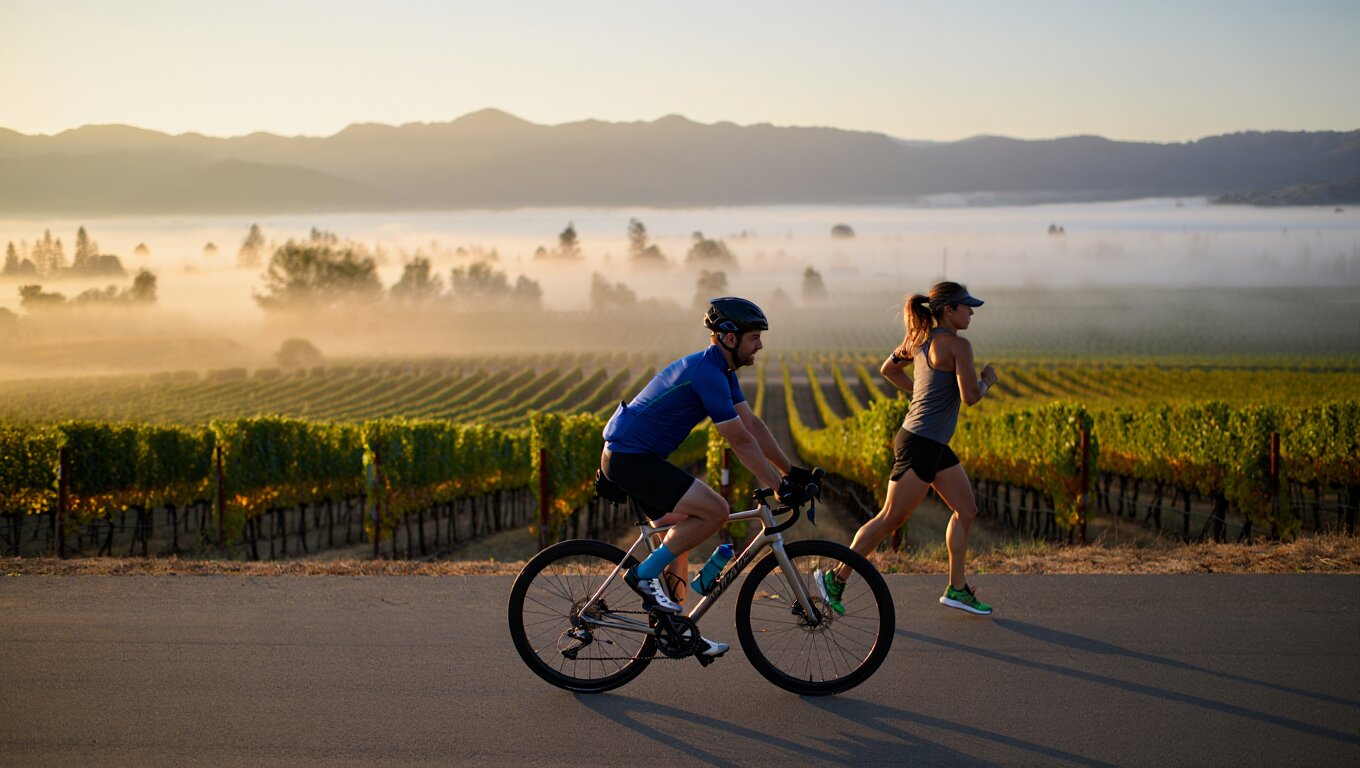
For short distances, this is one of Napa’s quiet pleasures.
Napa Valley Vine Trail: A paved, mostly car free path currently connecting Napa to Yountville.
Walkable hubs: Downtown Napa and Yountville are the easiest places to leave the car behind entirely.Local
weather note: Afternoon upvalley winds often blow north to south. If you bike from Napa toward Yountville, expect a headwind on the return.

What Most Visitors Miss
The late afternoon squeeze: Between 3:30 and 6:00 PM, Highway 29 slows dramatically. If you are upvalley, it is often better to stay for an early dinner rather than fight traffic back to Napa.
Designated driver services: You can hire a professional to drive your own rental car. This option is often significantly more affordable than a luxury vehicle while still providing local expertise.
My Local Notes
Some of the calmest Napa days I know start with a simple decision not to drive. I remember one afternoon where lunch ran long, a tasting turned into a conversation, and no one once checked the time because someone else had the keys. The Valley felt wider that day. Transportation was not something to manage. It was a buffer that let the experience unfold naturally.
Gentle Estate 8 or ONEHOPE Integration
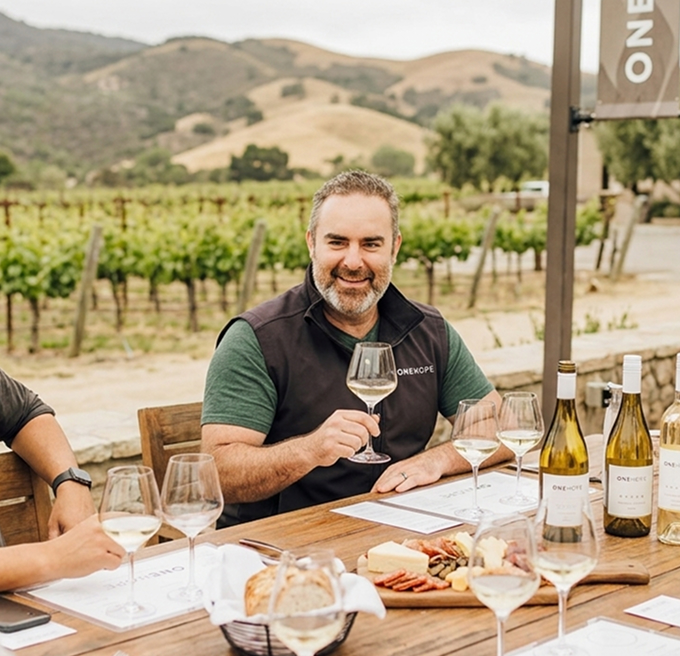
I will admit a little bias. Estate 8 and ONEHOPE were built around the belief that gathering works best when people are not distracted by logistics. They are very much my baby. The moments that linger for guests tend to come when transportation fades into the background and connection takes its place.