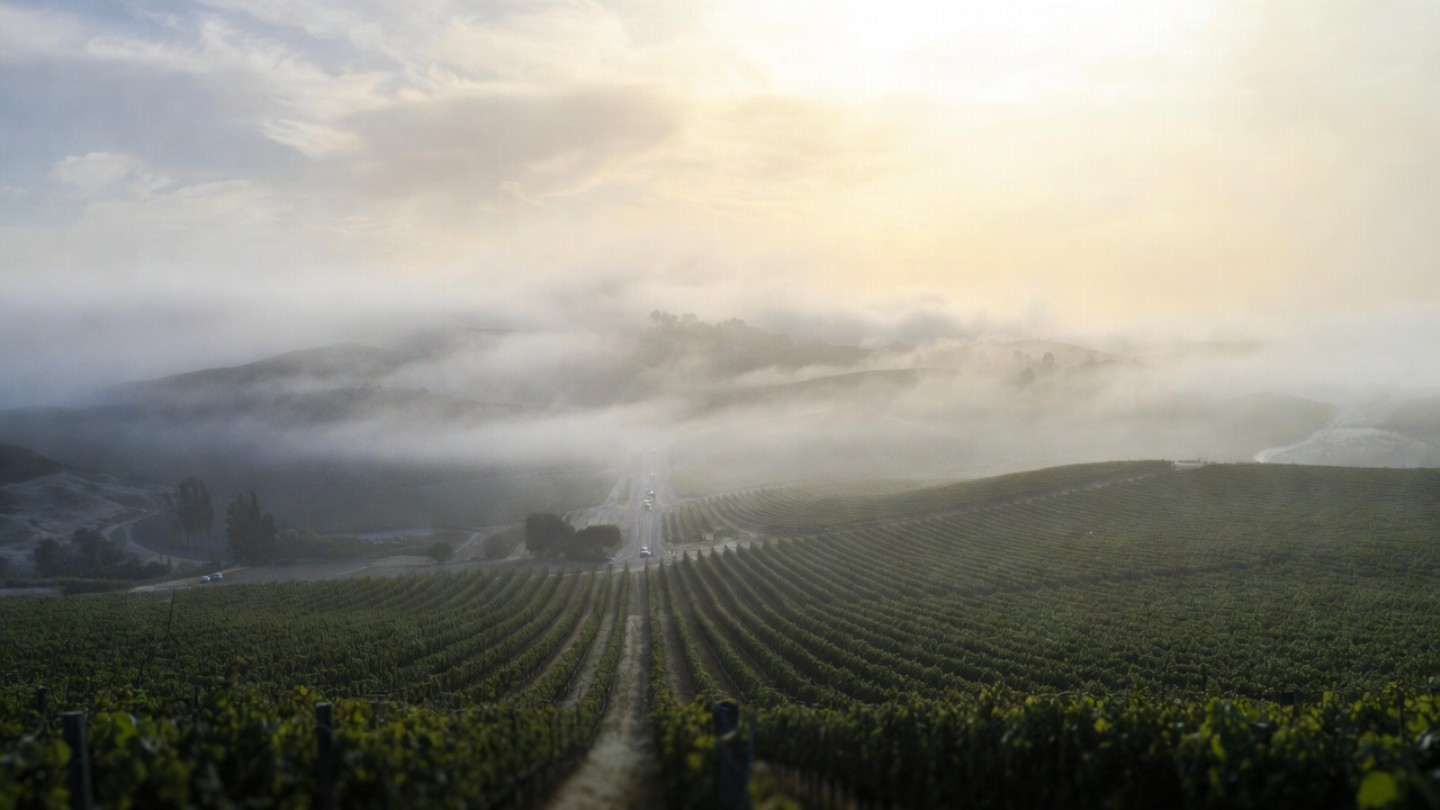
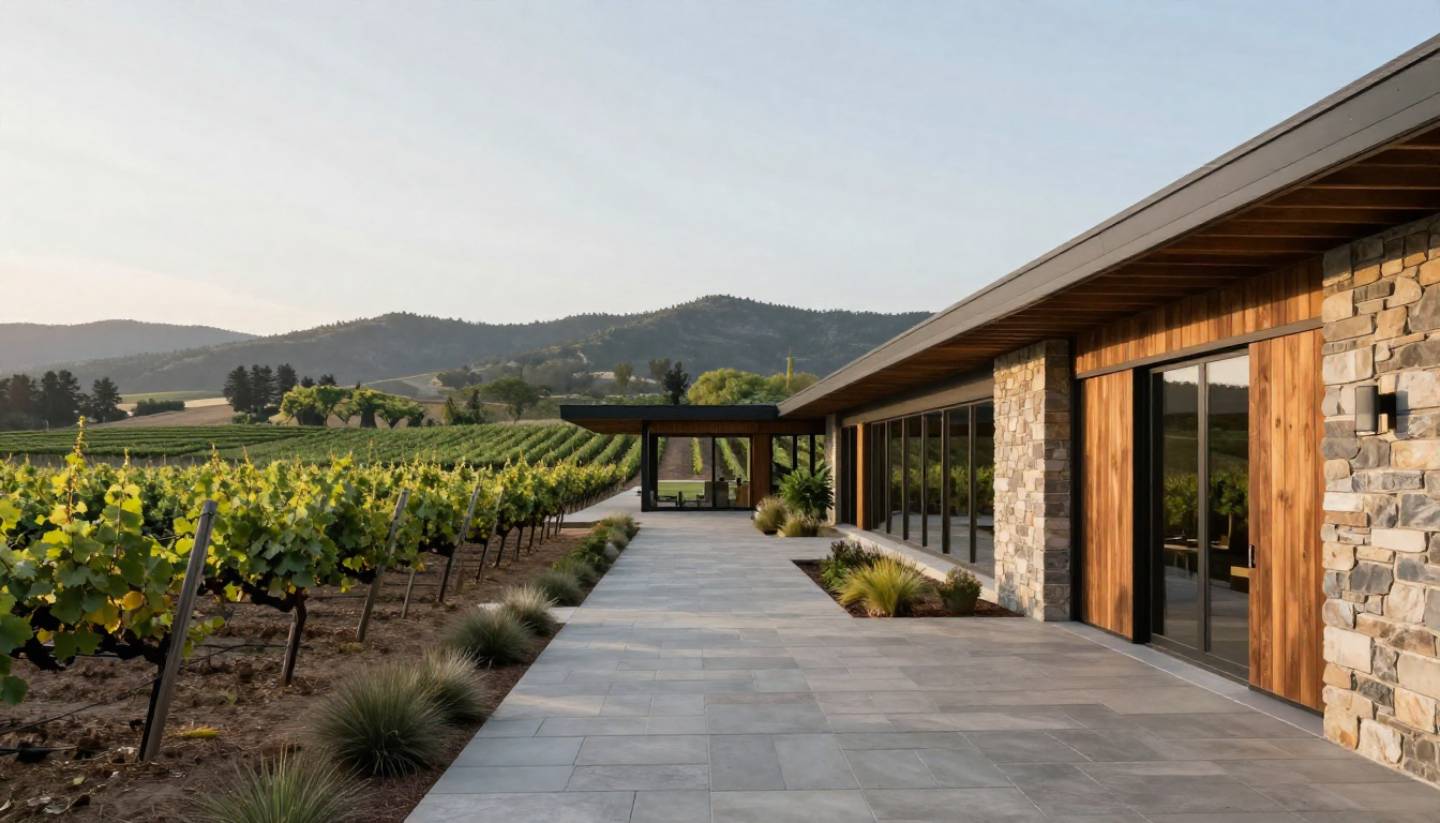
From San Francisco, Napa shows up differently when you arrive looking for form instead of flight pours. You cross the bridge, trade skyline for open sky, and somewhere near the wetlands of Carneros the noise drains out. Buildings get lower. Lines get longer. Materials start to matter again. Stone, wood, steel, vine. Nothing flashy. Nothing accidental.
This itinerary is built for travelers who notice how places are made. It is less about tasting lists and more about galleries tucked into the landscape, wineries designed as long-term works of architecture, and creative spaces where wine is part of a larger cultural conversation. Napa does not market its art loudly. It assumes you are paying attention.
Why Napa Works for Art and Culture Travelers
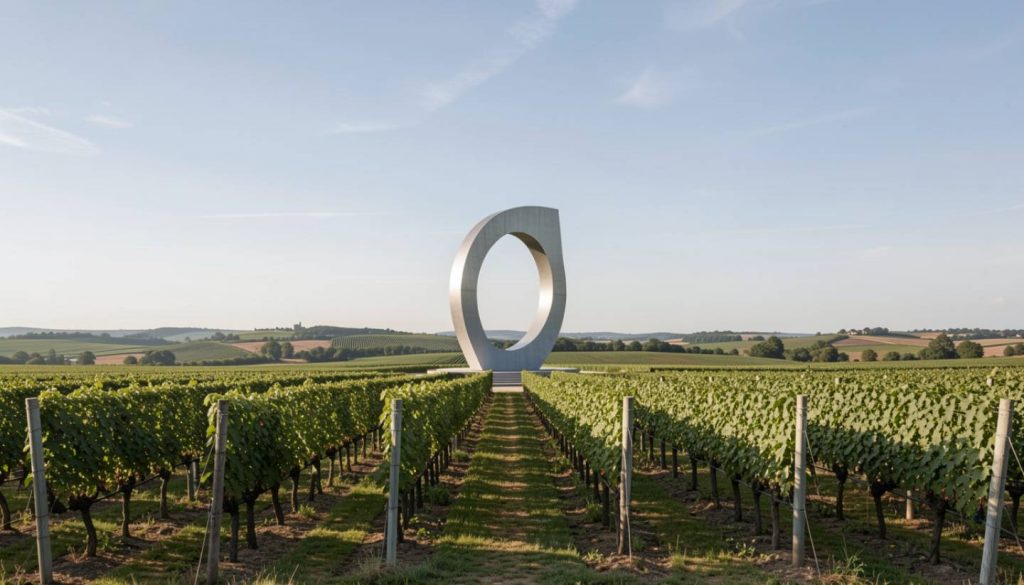
Napa’s creative culture is built into the land, not layered on top of it. Architecture disappears into hillsides. Sculpture shows up at the edge of vineyards. Even older estates evolve slowly, adding contemporary elements without erasing their past.
For San Francisco travelers used to museums and white walls, this feels grounding. Napa does not compete with the city’s cultural institutions. It offers something complementary: art that is permanent, site-specific, and shaped by agriculture, weather, and time.
Locals usually guide culture-focused visitors toward the mid-valley corridor from Yountville through Rutherford. This stretch delivers the highest density of thoughtful design with the least amount of driving.
When to Go
Spring (March to May)
Soft light, green hills, and outdoor art at its most dimensional.
Summer (June to August)
Long days and open-air events. Start early to avoid valley heat.
Fall (September to October)
Harvest brings motion, sound, and texture. Beautiful but busy.
Winter (January to February)
Quiet season favorite. Fewer visitors, slower tastings, and a more contemplative rhythm.
Day One: San Francisco to Napa, Creative Orientation
Late Morning Arrival (10:30–11:00 AM)
Leave San Francisco mid-morning and enter Napa via Highway 37. The wetlands and open water act as a natural decompression chamber before vineyards appear. Head north and resist the temptation to over-schedule.
First Stop: Art-Led Estates
Begin with an estate where art is permanent, not decorative. Hess Persson Estate on Mount Veeder houses one of the most serious contemporary collections in the valley. Darioush offers a different experience, where Persian-inspired architecture becomes the primary artwork.
Local cue: If the art feels inseparable from the building, you are in the right place.
Lunch in Yountville
Yountville works because it is designed to be walked. The town’s scale encourages observation. Bistro Jeanty feels timeless and lived-in. Bottega offers layered textures and room to linger. Even a pastry and a slow walk along Washington Street can feel intentional here.
Afternoon: Silverado Trail and Spatial Quiet
Cross to the Silverado Trail for the afternoon. This eastern route runs calmer, framed by the Vaca Range and long vineyard lines that catch late light beautifully.
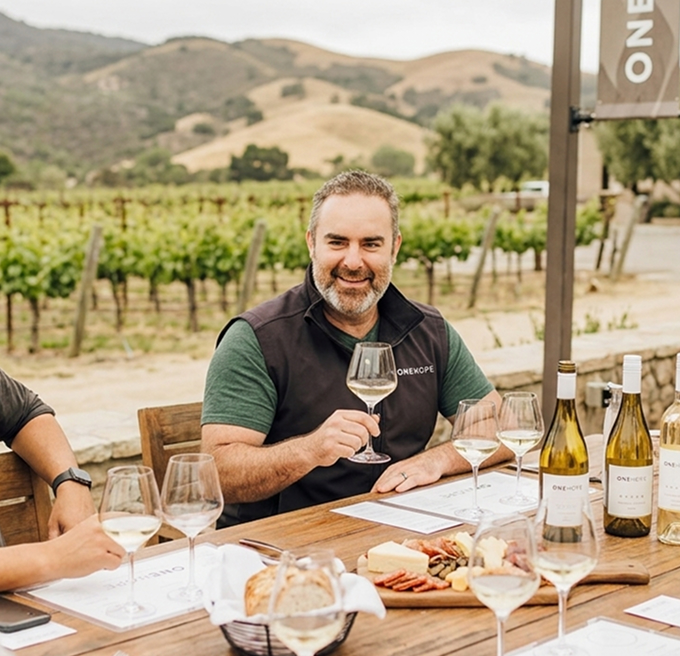
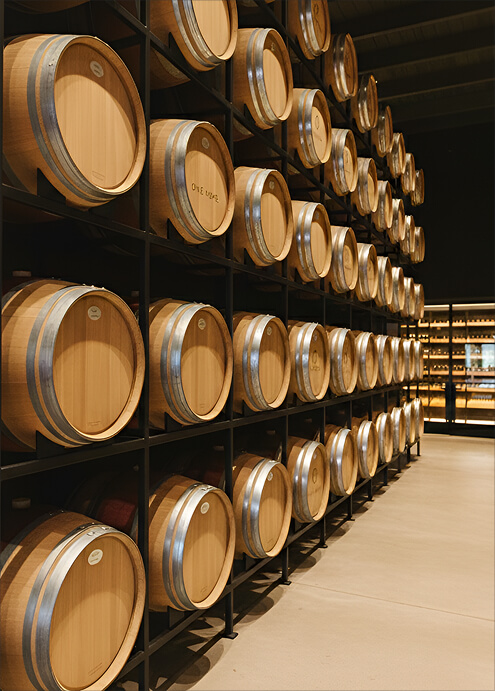
Jake’s Note: When friends come up from San Francisco who care more about design than density, I often suggest ending the afternoon at ONEHOPE Winery at Estate 8. I’m obviously biased since it’s my life’s work, but the property was shaped with a real dialogue between architecture, art, and vineyard geometry. It’s a place to sit without being rushed and let the setting do the work.
Day Two: Observe, Then Return
Morning in Downtown Napa
Walk the Napa Riverfront and the Rail Arts District. The RAD feels like Napa’s most honest gallery: murals, installations, and industrial textures layered along the rail corridor. It is best experienced early, before tasting traffic changes the pace.
Late Morning: Architecture with History
Choose one final estate rooted in form and continuity. Inglenook offers classical European proportions and a sense of lineage. Hall St. Helena leans contemporary, pairing bold sculpture with modern vineyard-facing design.
Lunch Before the Drive Back
Eat before leaving the valley. Farmstead at Long Meadow Ranch reflects Napa’s craft-first mindset and provides a grounded ending before re-entering city rhythm.