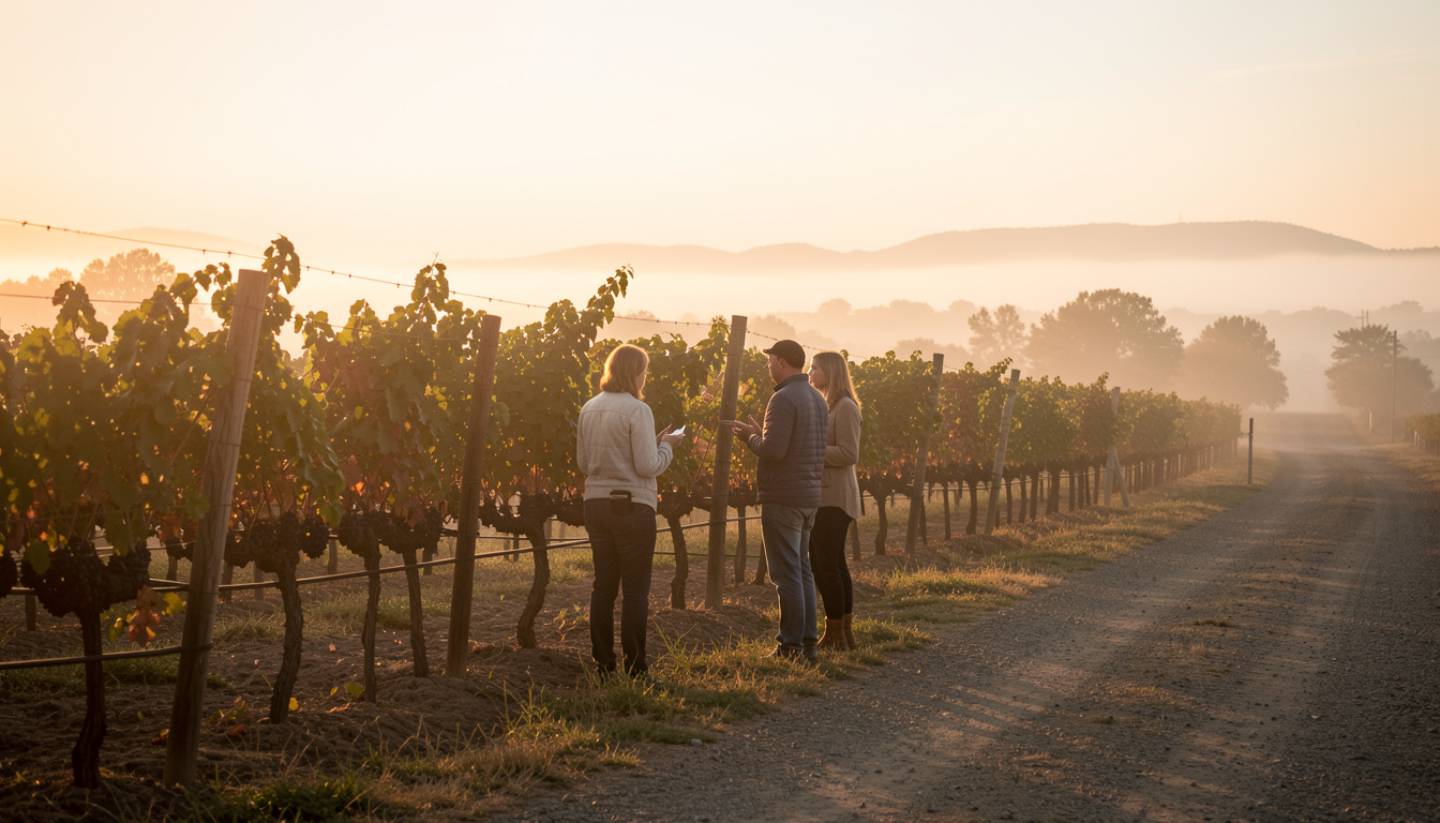
If you want to meet locals in Napa Valley, show up where nothing is being performed. Early morning. Midweek. Coffee counters, market aisles, vineyard edges. Napa reveals itself through the people who actually live here, the growers, cellar hands, bakers, and families who have worked this land for generations, not through polished tasting scripts. When you slow down enough to listen, introductions tend to happen on their own.
What This Experience Is Really About
Meeting locals in Napa is not about insider access. It is about timing and tone. People here are generous with stories when they are not rushed or performing hospitality. The valley runs on relationships, many of them decades old. If you approach with curiosity rather than an agenda, conversations open.
This is a working agricultural place first. Wine happens because people show up early and often stay late.
When It Is Best
Midweek
feels like real life in the valley.
Early mornings
catch people before the tasting day begins.
Winter and shoulder seasons
slow everything down and make room for longer exchanges.
Late afternoons
as the light softens often lead to relaxed, unguarded conversations after the day’s work is done.
What Most Visitors Miss
Many visitors move from appointment to appointment, rarely staying long enough to be recognized. Locals tend to stay put. They return to the same coffee spot. They shop the same stalls at Oxbow Public Market. Routine matters here.
If you want to meet people, go where repetition is part of the culture.
My Local Notes
Some of my best conversations here started without an introduction. Standing at a bakery counter in St. Helena. Leaning on a fence line along Silverado Trail. Once, before sunrise, I spent half an hour talking with a grower checking frost alarms on a cold morning. No tasting followed. No business card exchanged. But I walked away understanding Rutherford Dust in a way no formal tour could ever explain.
Where Locals Actually Spend Time
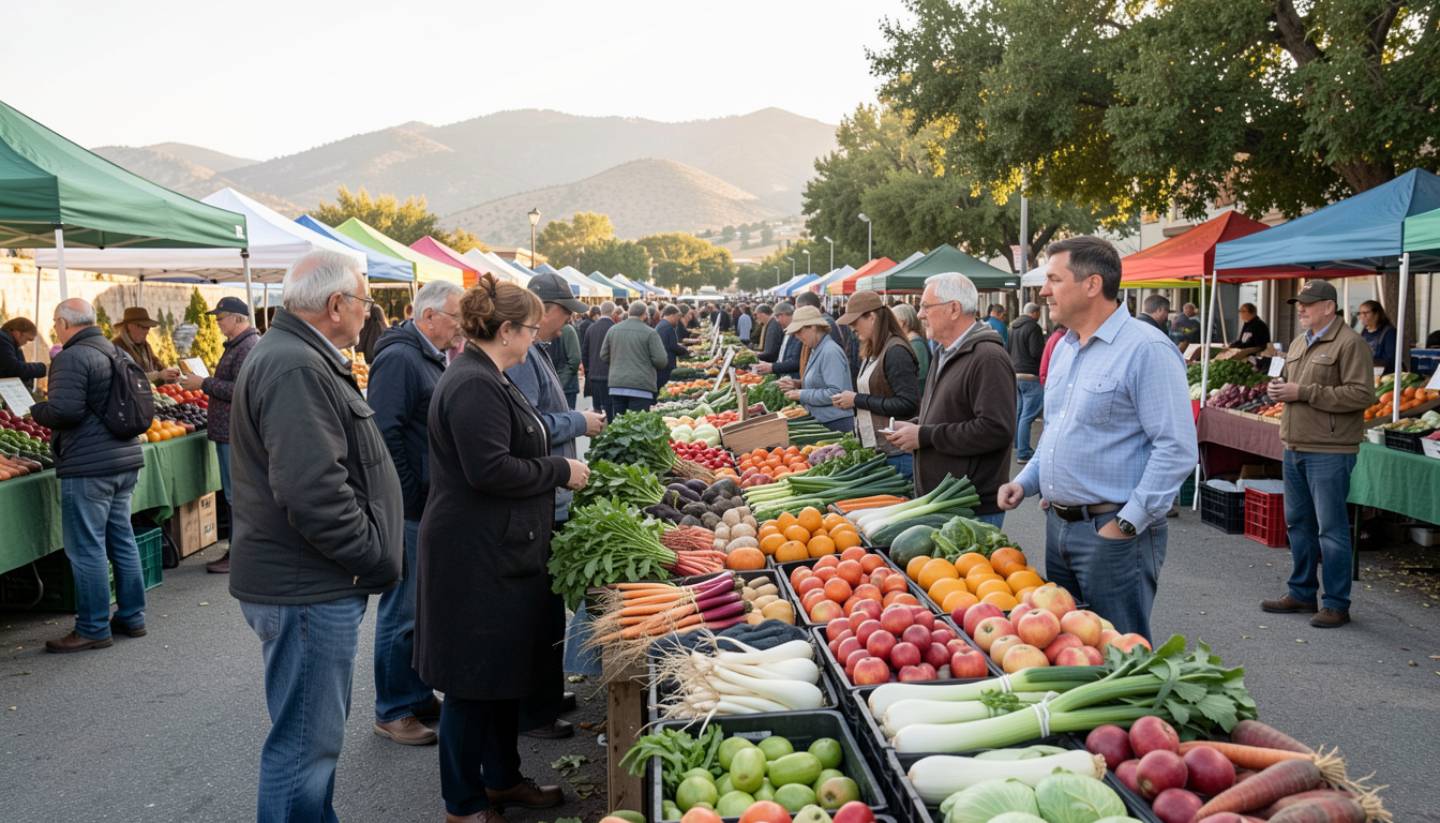
Farmers markets
especially the St. Helena market, where growers and cooks talk shop.
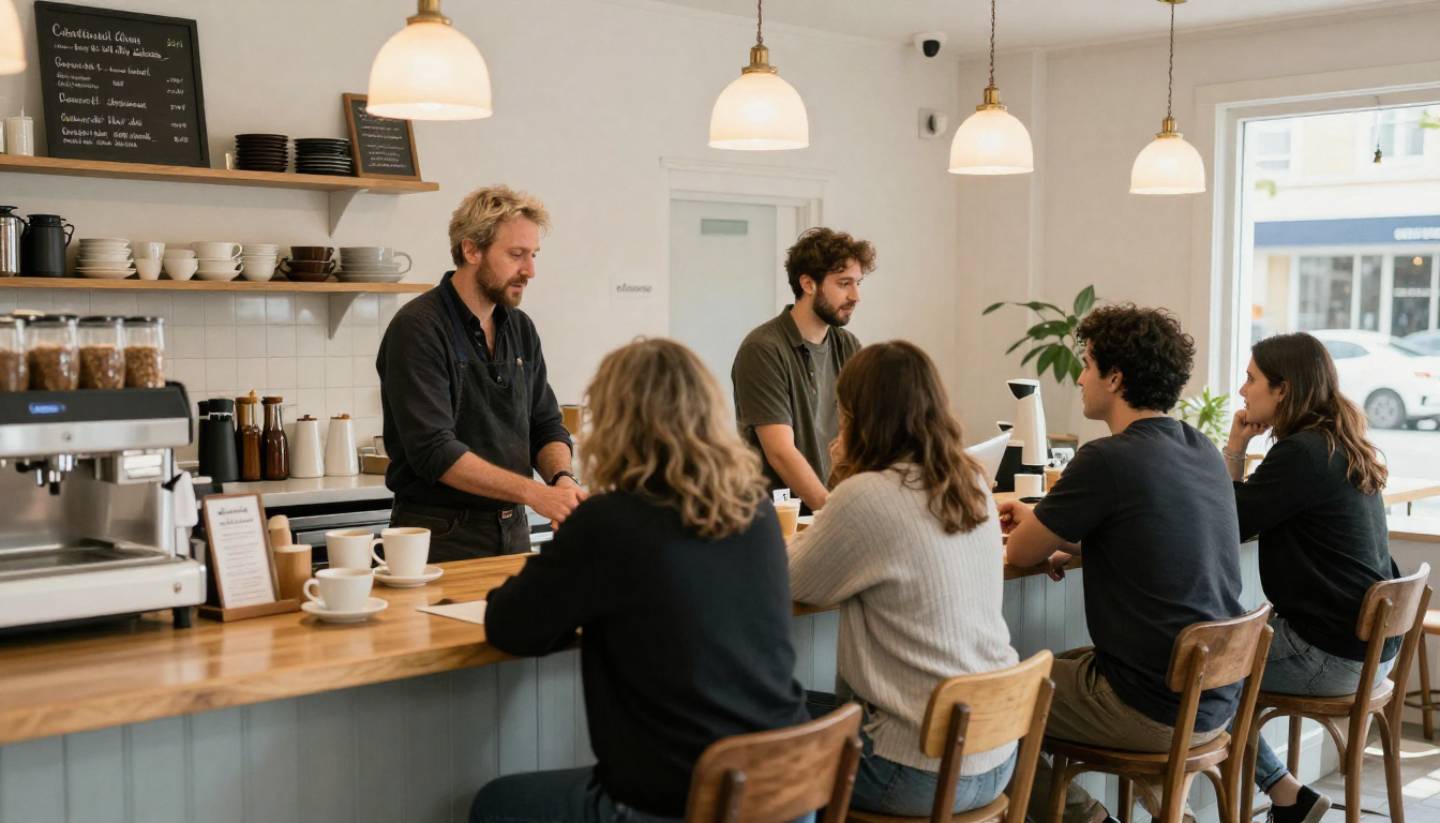
Neighborhood cafés
like Model Bakery or Boon Fly Café, where regulars set the rhythm.
Public paths
such as the Napa Valley Vine Trail, used for daily routines, not sightseeing.
Post shift spots
in Napa or Calistoga once tasting rooms close and the day exhales.
How to Start Conversations Naturally
Ask about the weather. It shapes everything here.
Ask what is changing this season. Harvest, pruning, mustard bloom.
Ask where someone eats on a day off.
Listen more than you speak.
Let silence do some of the work.
What to Avoid
Leading with insider requests or special access.
Acting like a critic instead of a neighbor.
Rushing the exchange or checking the time.
A Gentle Personal Note
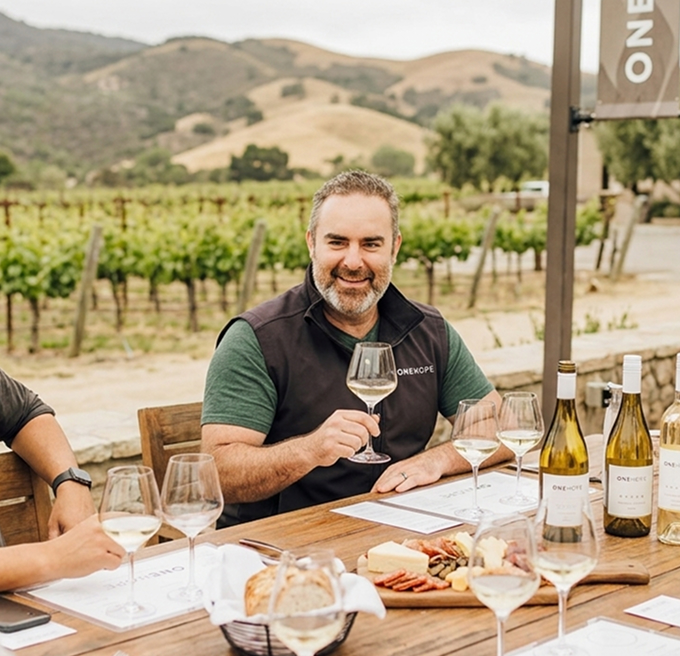
I will admit a little bias here. Estate 8 was created as a place where conversations can unfold without a script. Open air, long sightlines toward the Mayacamas, and room to sit were intentional choices. It is my passion project, built around the belief that Napa works best through shared space and unhurried exchange. When people feel comfortable, they talk. When they talk, the valley starts to make sense.
Small Histories
Before Napa was a destination, it was a tight network of families and tradespeople who depended on one another. Knowledge passed hand to hand in quiet cellars and fields. That culture still exists if you step into it with respect and patience.