Architecture in Napa Valley only works when it respects the land. If a building competes with the vineyard, it loses.
I grew up watching this valley shape itself season after season. Long before architecture tours were a thing, we judged a winery by how it handled fog, slope, and harvest traffic. On the Rutherford bench, morning light moves low and horizontal. Up on Howell Mountain or Mount Veeder, wind and elevation dictate mass and material. The Mayacamas foothills throw long western shadows that make or break a terrace design by late afternoon.
The best estate wineries in Napa are not the loudest or the most photographed. They are the ones that respond to site first and ego second. Proportion begins with grade. Materials weather honestly. Light becomes structure.
If you are searching for the best estate wineries in Napa for architecture, you are really looking for land-driven design, material restraint, and hospitality spaces that feel inevitable rather than imposed.
What Estate Really Means in Napa Architecture
In Napa, estate is not branding language. It means the winery controls the dirt.
That control shapes everything. Irrigation lines influence terrace placement. Harvest logistics affect crush pad orientation. Vineyard rows determine sightlines from tasting rooms. When a winery is truly estate-driven, the architecture feels resolved because it was designed around working agriculture, not layered on afterward.
Benchland estates in Rutherford and Oakville emphasize horizontal lines and vineyard symmetry. Mountain estates on Mount Veeder and Howell Mountain rely on gravity flow, thicker massing, and stone integration to manage elevation and temperature.
You can feel the difference the moment you step out of the car.
Best Estate Wineries in Napa for Architecture
Quintessa – Rutherford
Quintessa remains one of the clearest examples of architecture dissolving into land. The winery is partially concealed within the hillside, following natural contours instead of imposing new ones.
Design insight: Circulation mirrors vineyard flow. Guests move gradually through the space the same way fruit moves through gravity-driven production. Materials feel rooted rather than applied.
Best for: Designers who value integration over spectacle.
Hall Wines – Rutherford
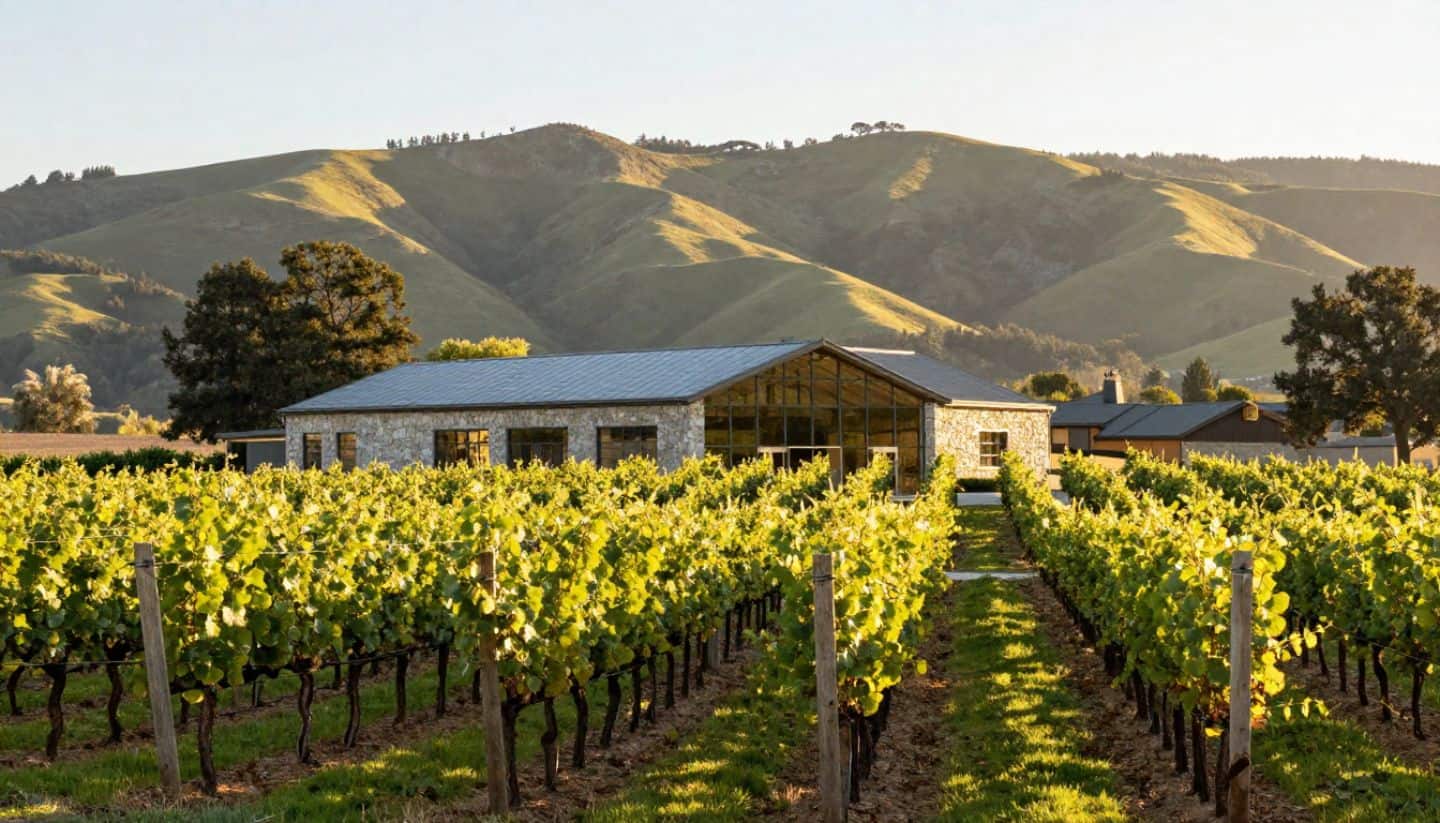
Hall balances contemporary glass and steel with classic vineyard framing. The clean pavilion lines contrast intentionally with the agricultural geometry outside.
Late afternoon is when it makes sense. As the sun drops behind the Mayacamas ridge, the glass façade picks up layered reflection rather than glare. The tension between modernity and farmland feels intentional.
Best for: Visitors drawn to modernism placed within a traditional Napa context.


Artesa Vineyards & Winery – Carneros
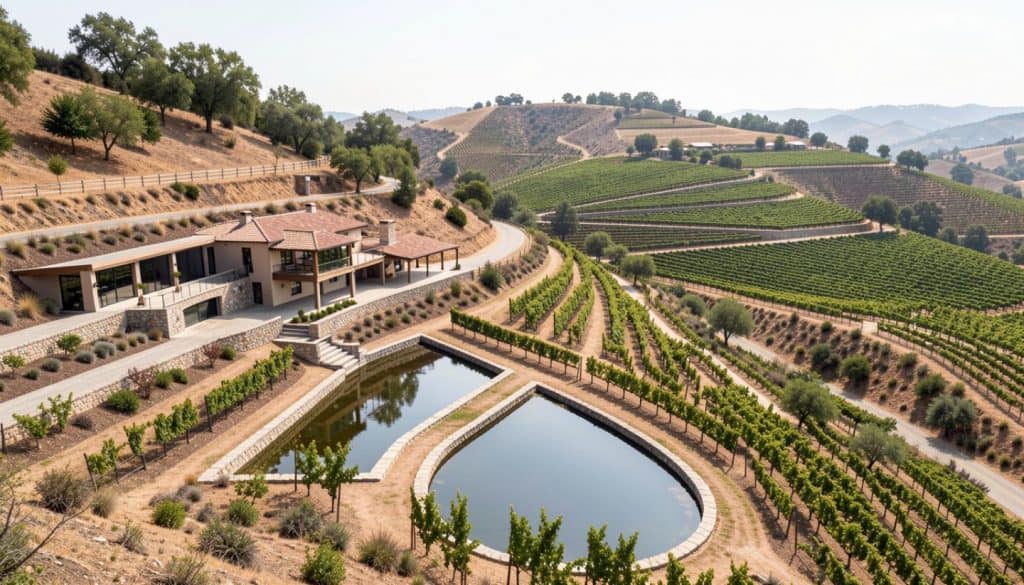
At the southern end of the valley, Carneros light is coastal and lower. Artesa uses terraced levels and reflecting pools to frame that horizon.
From distance, the structure reads as terrain. Up close, it creates deliberate compression and release moments as you move between exterior and interior spaces.
Best for: Studying terraced land use and how architecture holds expansive views without overwhelming them.
Mayacamas Vineyards – Mount Veeder
Historic stone buildings high on the western ridge. This is architecture built for endurance. Thick walls regulate temperature. Proportions are agricultural first, aesthetic second.
The winding drive is part of the experience. Commitment to elevation changes how you receive the building.
Best for: Those who appreciate heritage, stone massing, and mountain discipline.
Estate 8 – Rutherford Bench
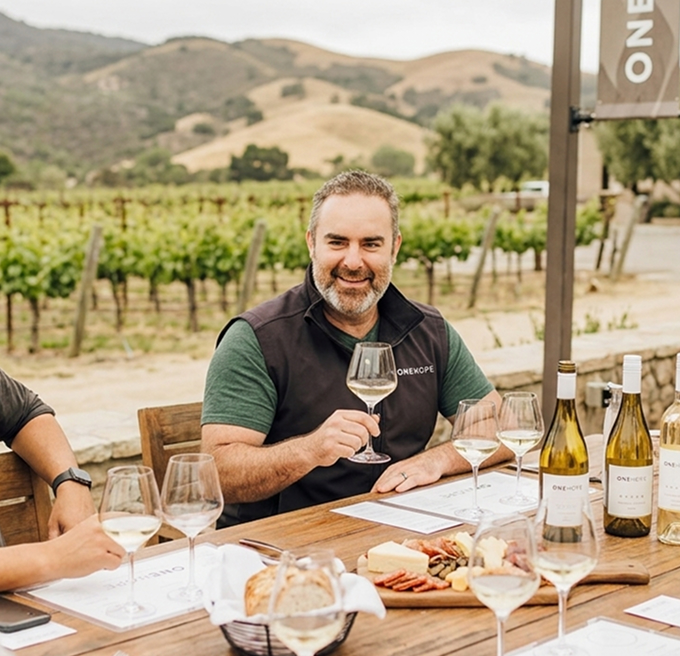
I will acknowledge my bias. Building Estate 8 and ONEHOPE came from years of studying how site, proportion, and circulation influence experience. They are very much my baby.
At Estate 8, the 360-degree tower was positioned to respect vineyard orientation and capture both the Vaca and Mayacamas ranges without overpowering the valley floor. Production remains intentionally small so the scale of the building never feels inflated beyond its purpose.
Architecture here frames the land. It does not compete with it.
Best for: Guests seeking a private, seated architectural experience rooted in estate-grown Cabernet.
A Personal Micro Story
One late afternoon in Rutherford, I walked a terrace with an architect visiting from New York. We said almost nothing for ten minutes. The fog had burned off, and the shadow line from the Mayacamas ridge moved slowly across the vineyard rows.
He finally said, “Nothing here is fighting anything.”
That is the test. In Napa, when the building, the land, and the light align, you feel it before you articulate it.
When to Visit for Architectural Study
Winter, often called Cabernet Season, offers the most honest read. Bare vines reveal the bones of the landscape and the building’s true orientation.
Spring sharpens horizontal lines with fresh green rows.
Summer provides reliable late afternoon light that defines surface depth and material texture.
Fall, during harvest, shows how architecture handles real operational pressure. Watching how a crush pad functions tells you more than any design statement.
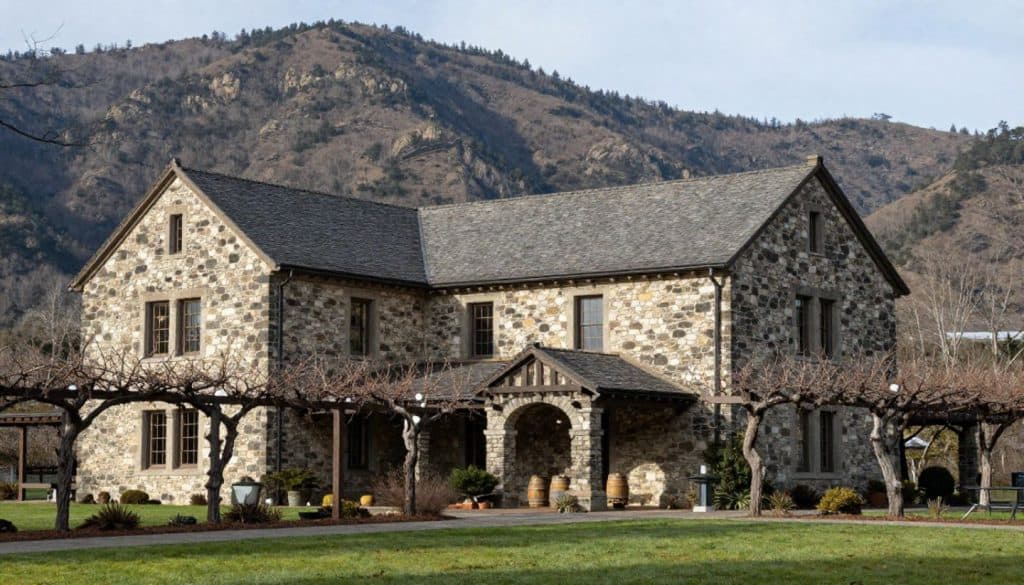
How to Structure an Architecture-Focused Day in Napa Valley
Morning: Coffee in St. Helena. Walk a few blocks and notice how 19th-century stone buildings meet contemporary hospitality design.
Midday: One seated estate tasting in Rutherford or Oakville. Observe thresholds between indoor and outdoor space and how staff move through the room.
Afternoon: Drive the Silverado Trail north toward Calistoga. The eastern side offers clearer sightlines of hillside integration than Highway 29.
Evening: Dinner at The Charter Oak or Farmstead at Long Meadow Ranch. Pay attention to acoustics, material transitions, and how the room holds conversation.
Limit yourself to one or two estates. Architecture fragments when you rush it.